

Offaly farmers recall lives of hard work

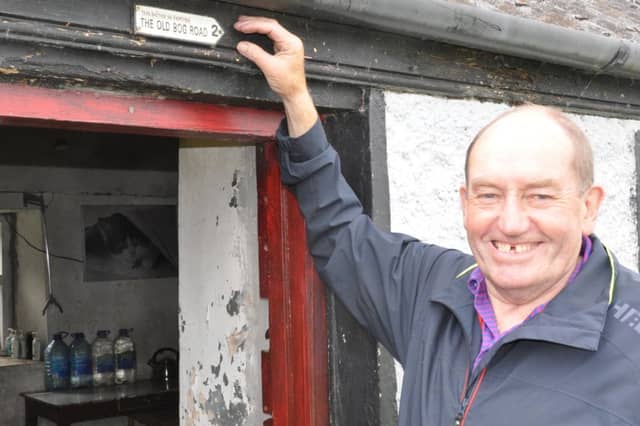

‘Growing sugar beet was pure slavery. The work was so hard and there was so much to do.’
THE book “Farming in Ireland” has been painstakingly researched by Cloghan man Pat Brereton and features interviews with Frank Clarke, Tom Loonam, John Dolan, Emma Dolan, Michael Silke, Johnny Butterfield, Padge Mulhare, and Thomas Brereton, among others. The book is widely available online and in a number of bookstores, including Midland Books in Tullamore.
Pat said researching the book meant coming home to meet neighbours and friends, which was a good thing to experience.
Pat writes with great felicity, asks many great questions and receives a lot of very interesting answers from the farmers. Here are three of those farmers and some of their answers:
Johnny Butterfield lives on a farm in Blueball in the parish of Killoughey, which is “famous for hurling.” He is the fifth John in the family, which was a Dempsey farm. His father married “a girl across the fields”. They had only two in the family, and his sister died in a car accident. His wife was a teacher and finished up as principal of the school.
"When I started out,” Johnny told the author, “it was before mechanisation; I worked horses here. My father had the first tractor with iron wheels. You had to be strong to drive it. We had a pony to drive to Mass.”
Their house was a rambling house, with Tuesday and Thursday for the older folk and younger ones on the other days. Frank Fogerty, his uncle, was a pig jobber. “He was a great historian and gave me a love of rural life. In winter and through the long nights they would tell stories. If there was nothing to talk about, then they always turned to discussing the Civil War. My father was a Fine Gael supporter and my mother was Fianna Fáil. But they got on ok.
"In school, we had four or five suicides after leaving there and it was horrible. I had a love of learning, so I did over 21 years of night classes, including sociology and farming. Tom Flanagan gave us a love of learning in night classes and told us all we needed to know about agriculture.”
When he left school Johnny joined the Pioneer Association and has never drunk since. One of the reasons he is glad about this is the money it saved him.
In 1967 he went into local Council politics and became very involved with this.
He believes farmers are over dependent on subsidies and is critical of the IFA for not preventing this from happening. Farmers felt compelled to enter the subsidies regime. “If you did not comply, you lost out big time.”
He recalled struggles with the IFA around taking street fairs off the streets. “The local Council wanted it removed, but traders did not want it ended, as it brought so much trade to the area.” He remembered parking horses on the streets in Tullamore.
At 23 he was elected as Fine Gael Councillor for Tullamore. He got on well with lots of other councillors from other political parties. He was good friends with Ber Cowen and Brian Cowen later. “They were good country people who had great principles.”
Johnny’s farm is a mixtured of “mixed land and a bit of bog.” He reclaimed a lot of it. Lots of their neighbours and friends worked in Bord na Móna. There was an acre of turnips, barley, and oats. They sold potatoes in Tullamore.
He was not sorry to see the phasing out of sugar beet. “Growing sugar beet was pure slavery. The work was so hard and there was so much to do.”
He’s retired now but still has a few suckler cows, sheep and a few horses. He said only once in 50 years were his sheep worried by dogs.
He feels green issues and biodiversity have been given too much focus. Pointing to a report from the EPA, where the policy for the future involves less stock, rewetting, etc, he commented, “How is farming going to survive with this plan? The whole thing is going haywire. The Farmers Journal is even pumping these queer ideas. It breaks my heart to see so much Offaly land being rewetted. Where is the food going to come from? How are people going to live on this land? My farm ended up producing the finest of grass on bogland. Rewilding should only be considered on very marginal land.”
Thomas Brereton of Ballyloughan, Cloghan, started farming in 1977. It was a daunting task when he took over the family farm. He decided to go into dairying on a much bigger scale. Before living in Ballyloughan the family lived in Cloghan in a corner shop. “We lived in a vibrant community,” recalled Tommy, “with five pubs and a drapery shop.” Tommy was asked if religion is important for him. “It is important; you have to believe in something. We have a great priest, who is getting lots of people back to mass. And I do a bit of reading in church, which makes me feel good.” Touching on the media he said the Farmers Journal sometimes omit the relevant facts and is sometimes too pro-IFA. He likes the Irish Independent’s Farm Journal supplement on Tuesdays, which he thinks is very accurate.
“What do you miss most about farming from the past?” Pat asked. “Farming is often a family-run business,” said Tommy, “and my wife Noreen and the kids were invaluable in helping on the farm. In dairying you need help, so a lot of family labour is needed.” Pat asked what Tommy missed most from when he was a child? “For instance, did you enjoy rambling or having time to talk to neighbours and the community?” “Not knowing your neighbours is a big difficulty now,” remarked Tommy. “Farming has changed a lot. The local Perry’s Mill down in Belmont was where we got all our grain and farmers would chat there for an hour. Now dairy farmers have no time to talk at all...I see so many new people coming into Cloghan now, which is great...The small farm has to survive, and that is a succession issue...We have to get the community more involved, bring people out to see what farming is like and to look after the local interests. That is how local communities can survive.”
Tom Loonam from Attinkee is a specialist in tillage and grain production and was the IFA leader of Offaly for a good number of years. Tom told Pat that successful grain production was all about size; “get big or get out” was a frequently used slogan. A good deal of his farm is given over to tillage.
Tom pointed out that dairy farming has become too big, “without ever thinking of the problems, problems with calves and the slurry waste etc. Before, 60 cows were seen as a nice scale for a long time; now huge numbers of cows on a farm are becoming common. It looks horrible when you look out on a field with so many animals, not to mention the workload on farmers! There’s also an issue with excessive nitrogen levels being deployed. But we can’t blame the farmer for this.” He spoke about the costs of buying land and infighting between dairy men and tillage men over land. In 1972 he bought land at £250 an acre; prices rose to £2,000 per acre in 1981; in 2021 it was £12,000 per acre.
All areas of Irish life have to change to meet the climate crisis, he believes. “Other areas of business including transport etc also have to change. Farmers are always targeted the most. Most farmers are doing their best and have adapted relatively well to the new circumstances. We have very good food and our livestock have rigorous standards.”