

Offaly drama teacher loses appeal against rape conviction
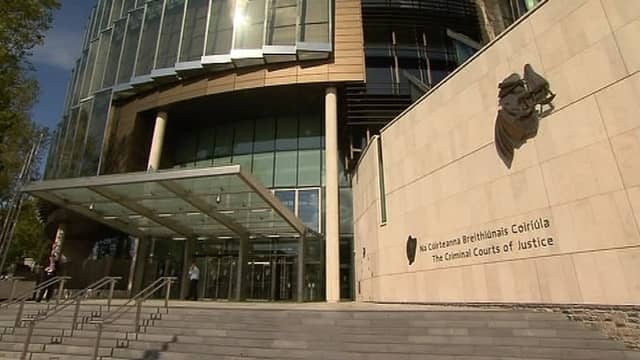

An Offaly drama teacher jailed for raping a student when she was around seven years old has lost an appeal against his conviction.
Kevin Carroll (58), of Hawthorne Drive, in Birr, Co Offaly had pleaded not guilty to two categories of raping the girl at the Offaly school on a date between 1996 and 1998 when she was aged between six and eight.
He was found guilty on both counts by a jury at the Central Criminal Court and sentenced to 10 years imprisonment by Ms Justice Margaret Heneghan on February 26, 2016.
Carroll lost an appeal against his conviction today on all grounds. President of the Court of Appeal Mr Justice George Birmingham said the three-judge court had not been persuaded that the trial was unsatisfactory or the verdict unsafe.
Carroll’s barrister, Roderick O’Hanlon SC, submitted that the trial judge ought to have discharged the jury when a witness inadvertently gave hearsay evidence that another witness reported to her that Carroll used to “look up the skirts of girls”. Mr O’Hanlon said it was “clearly prejudicial” and no judicial direction could have cured it.
Rejecting this ground, Mr Justice Birmingham said the reported comments were being attributed to someone who had much more “damning” things to say about what he had personally witnessed Carroll doing. The likely impact of the evidence had to be weighed against, and seen in light of, the totality of the evidence.
Mr O’Hanlon further submitted that the trial judge ought to have examined the jury after one juror apparently "smiled and winked" in the direction of the complainant and two gardaí.
The court heard that the defence characterised the expression on the juror’s face as a “smile” and a “wink” while the prosecution characterised it as “neutral to stern.”
Taking the description of defence counsel at its height, Mr Justice Birmingham said the judge was entitled to take the view that any engagement was minimal and did not amount to the sort of communication that would involve an interference in the trial process. “Neither a stern expression nor a wink or smile could have amounted to communication with a juror.”
He said the humanity that a juror brings to the process is an essential element of the right to trial by a jury of one's peers. Members of a jury bring their humanity and human response to the process, and this is the essence of their engagement, the judge said.
If someone decided to monitor the facial expressions of jurors throughout a trial, it is likely that they would observe many different expressions: sympathy; amusement; horror; disgust and anger, not to mention blank expressions and boredom. The fact a particular juror reacted in a particular way would not, in general, give rise to any response from the observer.
Mr Justice George Birmingham, who sat with Mr Justice John Hedigan and Ms Justice Marie Baker, said the three-judge court had not been persuaded that the trial was unsatisfactory or the verdict unsafe. The appeal was therefore dismissed.