

New and better era on the way for local government, for local democracy


Critics point out that Ireland has the lowest number of local elected representatives per capita in Europe.
A NEW and better era is on the way for local government and local democracy, the October meeting of Offaly County Council was told.
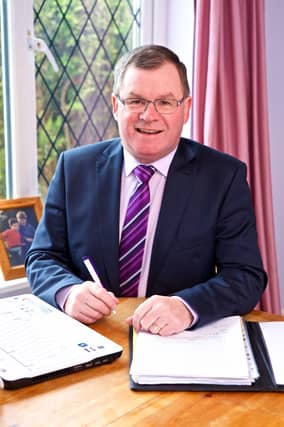
Cllr Seán O'Brien, Vice-Chairperson of the AILG (the Association of Irish Local Government) told the meeting that a far-ranging and insightful report (drawn up by the Local Democracy Taskforce) has been prepared and will be implemented in the coming years, improving the way local government goes about its business.
“This report means that there are better times ahead for us Councillors,” commented Cllr O'Brien. “There are a number of important changes to Councils on the way and they will be for the better, improving local democracy.”
Cllr Noel Cribbin agreed. “It is good to see that there are improvements coming down the tracks for Councillors.”
Cllr John Leahy said he thinks merging the two bodies representing County Councillors, the AILG and LAMA (Local Authorities Members Association) would be a good idea because one body would be better than two. He said there are new Councillors every five years and therefore the training programmes organised by AILG and LAMA are always very welcome. He said Councillors are at the coalface and have a higher workload than TDs. “We are very busy and in fact we need more Councillors than we currently have. Our workload is too high. It's also true that more people are approaching Councillors with queries and problems than ever before.” He added that the lack of interaction and helpfulness from the major semi-stage bodies Uisce Éireann and Transport Infrastructure Ireland is very unhelpful from a Councillor's point of view.
The changes, the new reforms, which are coming down the tracks for Councillors throughout Ireland will mean the Councillors will have a greater influence over local decision making. It will also mean they will have a stronger oversight of budgets and governance. Councillors will also be able to enjoy better access to information from Government Departments and public agencies.
The meeting was told that it is planned to introduce the improved Municipal Districts (which will be renamed “Municipal Councils”) by 2029 (coinciding with the local elections). It hasn't been decided yet if these Municipal Councils will be getting larger numbers of Councillors. It's often been pointed out that larger numbers of Councillors will go some way to easing the backward step taken in 2014 when Town Councils were abolished.
Reading out the Local Democracy Taskforce report, Cllr O'Brien said the new Municipal Councils, when they are introduced across all local authority areas in 2029, will have been “upgraded from current Municipal Districts and will serve as central hubs for local decision-making. The Municipal Councils will have improved Budgetary Powers.”
However, some critics point out that in their opinion the report does not go far enough because it does not explicitly mandate larger numbers of overall councillors nor does it mention the resurrection of autonomous standalone Town Councils.
Taoiseach Micheál Martin believes the report's implementations will be a "progressive step" that will partially address the legacy of the abolition of Town Councils by giving local areas and towns dedicated decision-making, improved municipal budgets, and enhanced powers. Critics argue that the plan "lacks ambition.”
However, the Local Democracy Taskforce was specifically asked to examine how councillor numbers are determined and explore frameworks for amendments, therefore it will be surprising if we don't see an increase in Councillor numbers across Ireland.
Councillors across Ireland have welcomed the fact there will be a devolution of additional functions, with Councillors shaping and overseeing services such as “housing, transport and community wellbeing.” There will also be a stronger voice with government which means the introduction of formal national-local engagement structures and earlier consultation with Councillors on policies affecting local government. There will be greater “local decision making, funding and budget responsibilities, with a renewed focus on towns and communities.” There will also be a stronger statutory role for Councillors in setting local policy and overseeing policy implementation.
Critics, however, point out that Ireland has the lowest number of local elected representatives per capita in Europe. Ireland has the highest number of people per individual local authority in the EU (averaging over 160,000 residents per council), far higher than any other member state. Ireland has 949 local councillors across its 31 local authorities (county and city councils). This works out to an average of roughly 5,300 citizens per councillor. European nations generally have a much higher density of local politicians relative to their populations. For example in France there is 1 councillor per 118 people; in Slovakia 1 councillor per 265 people; Finland: 1 councillor per 412 to 627 people; and Spain: 1 councillor per 620 people.
Critics point out that Irish local government has significantly less financial autonomy and fewer functional responsibilities (including limited or no role in public transport, policing, healthcare, or secondary education) compared to municipal systems elsewhere in Europe.