

Packed Offaly meeting voices strong opposition to Wind Farm


Lemanaghan community told to "fight for your lives"
A PACKED community hall in the Lemanaghan area last week expressed strong opposition to the proposed Wind Farm in the area.
The meeting in The Granary, Boher, Ballycumber, was called by the Lemanaghan Bog Heritage & Conservation Group, to give residents an opportunity to learn more about the proposed wind energy development and its potential impact on local life, heritage and the environment.
Bord na Móna and SSE recently submitted a planning application for 15 wind turbines, each standing at 220 metres tall, which would be the tallest in Ireland.
Aoife Phelan of the Bog Heritage Group said the fact so many turned out for the meeting showed “the growing concern across the area.”
Presentations were delivered by Brenda Dowling (CEPA - The Community Environmental Protection Alliance), residents from Stonestown, Councillor Seán O’Brien, and representatives of the Lemanaghan Bog Heritage and Conservation group.
A number of attendees spoke about their “shock and disbelief” when they heard of the recent planning submission. Residents from Stonestown, Cloghan spoke about their experience of living next to mega turbines.
They spoke of “relentless noise, sleep deprivation, and the cumulative toll on both physical and mental health.” One person told the Lemanaghan community to “fight for your lives”. Another said, “Don’t allow this to happen.”
Brenda Dowling of CEPA delivered a “passionate and evidence-based presentation” outlining the health implications associated with wind turbine developments.
She spoke about the effects of noise and infrasound, disrupted sleep patterns, chronic stress, and the knock-on effects these issues can have on families and communities.
Brenda said this was not an abstract or theoretical debate, but a “lived reality already affecting people nearby.” She called on the community to “stand united” - not only to protect Lemanaghan - but also to support those in Stonestown who are “already suffering.”
Councillor Seán O’Brien of Offaly County Council was present at the Granary meeting and he expressed a strong opposition against the project. He said he has submitted a formal motion to Offaly County Council, which will be considered during the May council meeting. The Councillor said he will remain actively engaged over the coming weeks, and he will be in “daily contact with council officials” as they prepare the Council’s submission. He said he understood the depth of local concern and he was committed to “ensuring community voices are heard.”
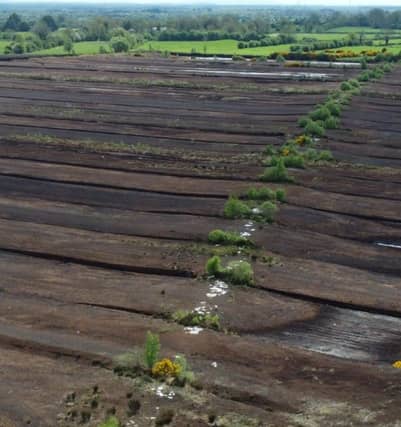
This was followed by a presentation outlining the many reasons why Lemanaghan Bog should be protected. Speakers highlighted the bog’s status as heritage at risk, the severe disruption that heavy goods vehicles would cause on already damaged and unsuitable bog roads, and the risks posed to local water sources relied upon by both people and animals. Emphasis was placed upon the bog’s “unique peatland biodiversity.”
It was pointed out that the developer’s own documentation identifies eight red-listed bird species within the area, including the Curlew, which is on the brink of extinction in Ireland, with only around 80–100 breeding pairs remaining nationwide.
A significant portion of the meeting focused on shadow flicker, “a phenomenon confirmed within the developer’s own assessments.” According to those documents, 157 homes lie within a 1.5km radius of the nearest proposed turbine. It was pointed out that modelling contained in the Environmental Impact Assessment (pages 55–68) shows several homes projected to “experience significant daily and annual shadow flicker, with some properties exposed to levels far exceeding those permitted under the 2006 Wind Energy Development Guidelines.”
Examples within the assessment indicate repeated flicker events during peak morning and evening hours, when families are most likely to be at home. Modelled results show daily exposures of in excess of 30 minutes for many residents, with some instances reaching over 80 minutes pre-mitigation, and many annual totals exceeding 30 hours which is “in breach of the 2006 Wind Turbine Guidelines.”
The meeting was told that these findings have raised “serious concerns about guideline compliance, resident wellbeing, and the long-term liveability of affected homes.”
In a press release issued to The Midland Tribune after The Granary meeting the Lemanaghan Bog Heritage and Conservation group stated: “The developer’s own assessment acknowledges that impacts such as shadow flicker and noise may occur and proposes to address these through a complaints-based system once the turbines are operational. Residents would be required to submit complaints before monitoring and mitigation are considered on a case-by-case basis. Measures such as curtailment are proposed only as reactive responses, with no guaranteed time frames or binding thresholds.”
The Group is strongly encouraging the local community to review Chapter 5 of the documentation, which also references the use of curtains or blinds as a mitigation measure for shadow flicker. The Group has expressed serious concern that such measures would place the burden on householders, “effectively requiring residents to limit daylight use of their homes rather than preventing unacceptable impacts at source. Attendees at The Granary meeting questioned how a wind farm could reasonably be designed in a way that will negatively affect people’s enjoyment of their own living spaces.
“Concerns were also raised about Bord na Móna's position as a semi-state company. Given that it's a semi-state company it raises questions as to how such impacts on Irish communities could be considered acceptable from a semi-state body. Surely our government cannot support this or allow this to happen to its own people?
“The group absolutely refutes the claim within the planning application that 'comprehensive public engagement' has been entered into. Bord na Móna and SSE have continued to decline participation in open public debate or group community gatherings, including the public community meeting held in The Granary. While limited information sessions have occurred, these amounted to restricted and selective 'consultation', with key information omitted and little opportunity for meaningful dialogue.
“Regarding house values the meeting also heard homes and livelihoods are being evaluated using evidence that bears little relevance to Irish planning conditions or housing markets. The meeting concluded with a practical discussion on how to make a formal submission. Attendees were guided through the process of reviewing the extensive planning documentation and encouraged to engage fully.
“Community members were urged to speak with neighbours, family, and friends, to spread awareness, and to make individual submissions. The evening closed with a strong sense of unity and resolve. While fear and worry were evident, so too was determination.”