

OPINION (AN COLÚN): The connection between a Birr astronomer & one of the world's great artists

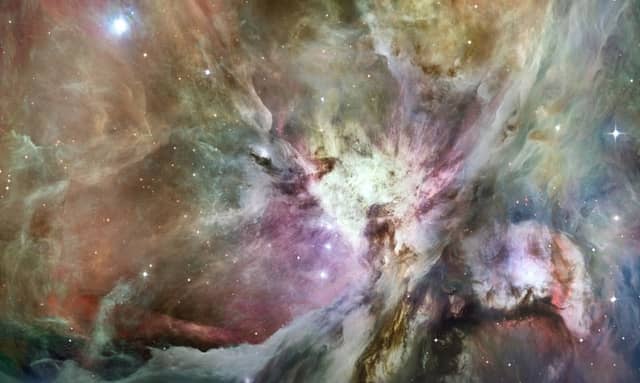

Exhibition highlights connection between an Offaly genius and a Dutch master
There's a very fine exhibition currently running in the Copper Tree Gallery in Birr Castle which is strongly recommended for anyone who appreciates the history of Ireland's art, culture, and scientific heritage (surely an appreciation which all right-thinking people should aspire to?)
It's called the Rosse Drawings Exhibition and features a series of drawings of nebulae, including spiral nebulae, by the 3rd Earl of Rosse between 1845 and 1866 under challenging night-time conditions. They mark a pivotal moment in astronomy, capturing cosmic structures before the age of astrophotography. The drawings combine science and art, and show how early astronomers had to be accomplished artists as well as accomplished scientists, in the process significantly advancing our understanding of the universe.
The exhibition was officially launched by the French Ambassador to Ireland Her Excellency Céline Place. Where had the Ambassador worked prior to coming to Ireland? I asked myself. Well, the internet told me that, interestingly, considering the times we live in, she was an adviser on the Arab world at the Ministry for Europe and Foreign Affairs in Paris and in a number of embassies. She was based in the French Embassy in Lebanon from 2011 to 2015 during which time she coordinated asylum issues and French humanitarian cooperation on behalf of Syrian and Palestinian refugees. She also worked on governance and human rights cooperation in liaison with the United Nations and NGOs in Tunisia from 2015 to 2018. Ms Place has been the French Ambassador to Ireland since last October. Ireland and France enjoy a benign and fruitful relationship, which will hopefully blossom further. Many of us in Ireland are Francophiles and it is little wonder. France is a beautiful country and a vital part of our European identity.
The Ambassador told those gathered for the official opening that Vincent Van Gogh's extremely famous painting The Starry Night, which was painted in the region of Provence, France, had been influenced by the Third Earl of Rosse's spiral nebulae drawings.
Lady Alicia Parsons, who is a 3rd-great granddaughter of the Third Earl, vividly described the working conditions for her famous predecessor. “It is magical to think of my direct ancestor, sketching from a wooden platform beside the Great Telescope, 10 metres high on freezing winter nights, using only a red lantern for light. These drawings are astounding in their precision. I defy anyone who sees them not to marvel at what was achieved back in 1845, at how skilful these drawings are.”
The 3rd Earl, William Parsons, was born in June 1800 and lived for 67 years. He studied Mathematics in university and inherited the large estate in Offaly in February 1841. He also served as an Irish Member of Parliament, President of the Royal Society, and Chancellor of Trinity College, Dublin. He was one of the good landlords and was known for his strong moral compass and commitment to improving the lives of his tenants and community. He was known for possessing a conciliatory personality and genial outlook.
When we think of William Parsons we think, rightly so, of positive things. As a personality he set an example which it would be wise for us to try and emulate, because of his moral compass and conciliatory nature. However, as he sketched his drawings on the ten metre platform on cold winter nights there was also a great darkness in the world beyond the castle's walls, the Famine. Of course, he was in no way responsible for any of that terrible suffering, but it's there nonetheless as we contemplate his excellent work - a great blackness rising like a spectre in the background of his astronomical endeavours.
In comparison with William Parsons, when we think of Van Gogh there's a lot more darkness in his personality. Contemporary psychologists have labelled him many things, including someone possessing an Obsessive Compulsive Personality, someone with a drink problem, and someone who suffered from bipolar disorder. In other words, a person who was extremely difficult, even dangerous, and it would be best to steer away from him if we knew what was best for us. Nonetheless there's a lot of light and beauty in Van Gogh's personality as well and this is his terrible tragedy, that life and his choices beat him down, reduced him to such a degree that he was overwhelmed by the darkness. “The sadness will last forever,” he told his brother just before he died. Nonetheless, his work and even, sometimes, his life remind us of something wonderful. The Starry Night reminds us of this. In it the nebula sky expresses God's immanence while the yellow light in the village windows represents God's compassion.
READ MORE: