

OPINION (AN COLÚN): 'If man could be crossed with the cat it would improve man'

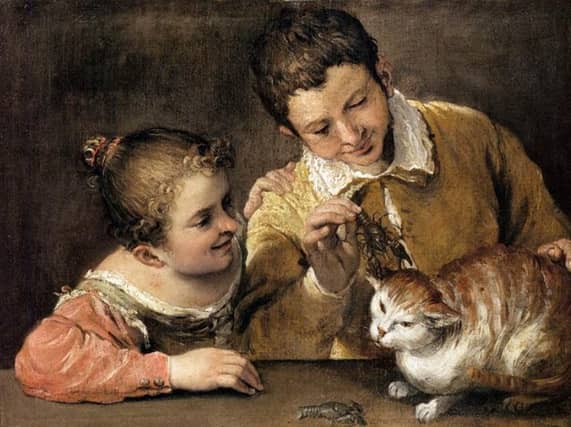

MARK TWAIN famously struck the nail on the head concerning the nastiness of people as opposed to the therapeutic effect of cats when he remarked, “If man could be crossed with the cat it would improve man, but it would deteriorate the cat.”
I have kept cats for the last thirty years and the feeling of comfort and affection they give is invaluable. People are fickle – nice one minute, moody and difficult the next, whereas cats are constant in their needs and their behaviour. They provide us with a sense of being in a protective nest when the outside world seems harsh and cruel.
Cats have become ever more popular around the world in recent decades as the number of people who appreciate and value their worth has increased. There are some people who feel ill at ease talking about "comfort" and "affection" when it comes to cats and who like to focus on their practical use. They talk about the animal's mouse- and rat-catching role rather than focus on emotions which they consider a bit effeminate and suspect.
Beyond keeping rodents out of your home there is nothing more in practical terms that cats can do for you. They obviously can't be trained in the way dogs and horses can and therefore don't have the same wide variety of roles; nor do they provide us with food in the way that cattle, pigs and chickens do. And yet, because of their rodent-repelling ability and the huge comfort, in emotional terms, that they give us they are just as highly valued as our other domesticated animals.
In antiquity there were five cultures which worshipped cat gods and goddesses as part of their religions. These included the Egyptians, the Greeks, the Vikings, the Polish and the Chinese.
In Ireland our myths surrounding cats are heavily influenced by the Tuatha Dé Danann, the ancient Gods who could change their size and become mischievous fairies. These beings “had every charm but conscience,” said Yeats. Therefore cats in Irish myth can be forces for good, evil or they can be somewhat ambivalent. Cat Sí, for example, had negative connotations. These were intelligent and cunning fairies who looked exactly like cats. They were reputed to be terrifying creatures who stole the souls of the recently dead by walking across their graves. This belief continued into the modern era and led to cats being chased away from graveyards, just in case there was any truth to the myth. The myth may well be the basis of superstitions regarding black cats and graveyards. Some people believed that the Cat Sí was a witch that could transform voluntarily into its cat form and back nine times. If one of these witches chose to go back into their cat form for the ninth time, they would remain a cat for the rest of their lives. It is believed by some that this is how the idea of a cat having nine lives originated.
A mysterious creature, known as the Bog Cat, was said to roam the shores of Lough Neagh. The Bog Cat was cunning, fast, large, and bestowed blessings upon all who crossed its path.Of course, in Ireland, black cats are also harbingers of good luck, wealth, and happiness.
The Vikings believed that the Goddess Freyja rode in a chariot which was pulled by two spectacular grey cats. Norse farmers left food offerings for cats because they believed that this would bring about good harvests. The Polish god Ovinnik was a large black cat with blazing yellow eyes. In some cultures the cat gods and goddesses were perceived as being benign deities who had the best interests of the people at heart. In ancient Egypt killing a cat was absolutely forbidden and when a household cat died, the whole family would mourn and shave their eyebrows. By contrast other cultures perceived cats in disturbingly negative ways. In the middle ages cats were associated with vanity and witchcraft and were sometimes burned as symbols of the devil. This barbaric behaviour was condoned by the Popes. In the 1230s Pope Gregory IX announced that there was a rise in devil worshipping and that cats were often part of satanic rituals.
Nowadays we thankfully have left the medieval church's attitude to cats far behind and they have never been so popular. They are the most popular pet in the world, outnumbering dogs by three to one. Being top predators and more independent they are easier to look after than dogs. In a world which can seem very pragmatic, business-like and cold, cats offer us a much-needed outlet for emotional expression. When we return home from our day in the world, with all its challenges and difficulties, as we close our front door we step over the threshold into our safe space. At home there is no need to meet the demands of society's diktats and fashions. We can be completely ourselves; and part of that expression of who we really are includes nesting behaviour with our pets.