

OPINION (AN COLÚN): Offaly's beauty and the magic of the dawn chorus

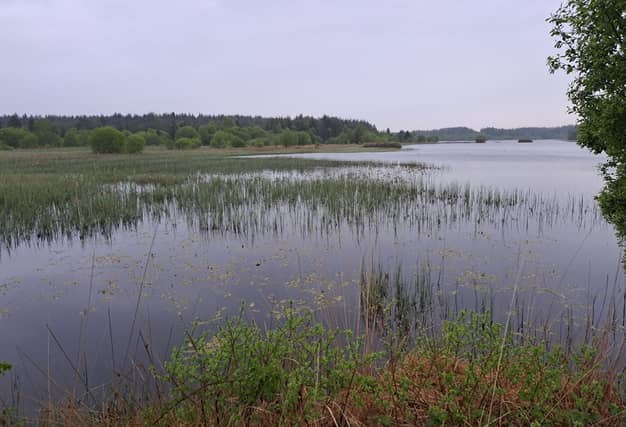

A GROUP of nature enthusiasts gathered on Thursday evening at Derryounce Bog and Lakes for a Dusk Chorus Walk. It was a damp evening, the kind of grey, potentially dispiriting weather which makes many people bemoan the fact they live in this part of the world, the kind of weather which makes them yearn for sunnier countries; however, as you walk through our beautiful Offaly countryside and are surrounded on all sides by a wall of wonderful avian singing, the gloom is dissipated and the grey is replaced by a golden emotional, inner glow, within your heart. The beauty of the bird chorus during these special May days has a transformational effect on the environment and on us. It awakens our hearts and we therefore look on the rain and the sky's grey curtain with love and pleasure; our critical, dark mood is replaced with a lightness of feeling and we see the world around us as being filled with the peace of God.
The nature enthusiasts, all members of the Offaly Naturalists' Field Club, enjoyed a very interesting hour and a half walk to Derryounce lakes and back with Ricky Whelan leading. Ricky is Offaly's new Biodiversity Officer and it was invaluable to have someone who knows their bird song and was able to give tips for remembering them. The walkers heard a variety of birds among the mosaic of habitats at Derryounce, including: Robin, Wren, Blackbird, Blue Tit, Great Tit, Willow Warbler, Chiffchaff, Blackcap, Dunnock, Redpoll, Siskin, Song Thrush, Goldcrest, Reed Bunting, Woodpigeon, Chaffinch, House Martin, Swallow, and possibly a Whitethroat. Along with a couple of Swans and Mallards on the lakes themselves, it was a rich experience, an excellent way to spend an evening.
Ricky will also be leading A Dawn Chorus Walk at Lough Boora Discovery Park on Sunday 14th May at 4am, a challenging early start but definitely worth it.
For many years I would look at a Birdwatch notice in the newspaper or on the internet announcing a dawn chorus gathering somewhere in the country and I would say to myself that I would love to join; but I never did. The early hour always defeated me. If I had been socialising or watching TV or working late it felt impossible to get up! But a few years ago I was determined and went to bed nice and early. When the time of 3 arrived I felt pretty ok and I joined fifty others in the Historic Science Centre courtyard in Birr. We walked a few yards into the Castle gardens, probably the most beautiful gardens in Ireland, and listened to a solitary song thrush performing its dawn solo. This solitary male on a tree branch was either announcing his territory or trying to attract a mate. The liquid notes are of course beautiful. They are loud and clear and the bird repeats them two to four times. They go something like, filip filip filip codidio codidio quitquitquit tittit tittit tereret tereret tereret, and are interspersed with grating notes and mimicry. An individual male might have a repertoire of more than a hundred phrases. The poet Robert Browning wrote famously about him, “That's the wise thrush; he sings each song twice over, / Lest you should think he never could recapture / The first fine careless rapture!” We walked on a little more and now heard a few blackbirds joining the song thrush. The blackbird has an equally beautiful song, described memorably as “a varied and melodious low-pitched fluted warble.” As we approached nearer it gave a call of alarm, a pook-pook-pook cry, expressing displeasure at our presence. The World War One poet Edward Thomas wrote a celebrated poem called “Adlestrop” and it describes perfectly the beauty of the blackbird's song and the wider Dawn Chorus, “And for that minute a blackbird sang / Close by, and round him, mistier, / Farther and farther, all the birds / Of Oxfordshire and Gloucestershire.”
We walked through the gardens for an hour, pausing from time to time, listening to the hundreds of birds around us and our guide telling us what each one was. He said three birds make up about three quarters of the Dawn Chorus, the song thrush, the blackbird and the robin. He told us that the wren is an incredibly common bird and can be found anywhere in Ireland. He said the Blackcap is quite common now, having migrated west from Germany over the last twenty-five years. Twenty-five years ago Blackcaps were rare visitors to Ireland.
The cries of pheasants punctuated the air and pigeons cooed in the trees. We heard the goldcrest. The goldcrest is a tiny bird, smaller than the wren. The song is a repetition of high, thin notes. It is the smallest European bird and has a weight of 4.5 to 7 grams. For such a small bird, they can migrate vast distances, often in huge numbers.
Our guide drew our attention to a Great Tit whose song, he said, sounded like someone pumping up a bike tyre. It also sounds like “teacher-teacher”. It's loud and high pitched. We heard the chaffinch, whose song was described by one writer as “a cricketer running up to bowl - the last part when he lets go of the ball”. The chaffinch has a powerful song and it's possible that the “fink” or “vink” sounding call gives the finch family its English name. Males typically sing two or three different song types. And finally, we heard the Blue Tit whose high pitched trilling song is often written as “tsee-tsee-tsee-chu-chu-chu”.