

Census 1926 reveals identities of hundreds of Laois Offaly 'inmates' at Portlaoise's 'Lunatic Asylum'

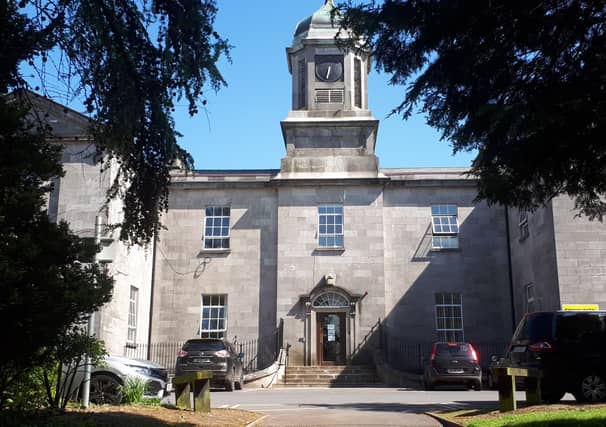

Maryborough District Lunatic Asylum would later become St Fintan's Hospital
Newly published data from the Census of 1926 reveal the number and names of people who were officially recorded as "inmates" of the Maryborough District Lunatic Asylum.
The landmark publication reveals that there were just over 500 men and women of various ages in what was also referred to as the Portlaoise Mental Hospital in census return records from a century ago.
The Census documents reveal the names, gender, age, date of birth, religion and place of birth of all those in the facility on the Dublin Road at the time numbers were counted in April 1926.
Nearly all the men and women in the hospital were natives of Laois and Offaly. They range in age from people in their 20s to elderly people. The vast majority were Roman Catholics. There are no details on the ailments that led to their admissions.
Over 40 staff, mainly nurses and attendants, were recorded as being resident in the facility during the Census. Their identities are also revealed, as is their gender, marital status, religion, age and place of birth.
The head of the asylum at the time was Pierce Grace, who lived on the grounds with his wife and children at the time. They are also identified.
The asylum would become known as Portlaoise Mental Hospital in the 1920s after Independence from Britain and would later become St Fintan's Hospital in the 1950s. It appears that the Maryborough District Lunatic Asylum was the working name when the Census was taken.
It was a Laois man who set out plans to close around 14 Victorian-era psychiatric hospitals and to transfer around 1,200 patients to community facilities in 2009, though patients continued to be admitted to St Fintan's beyond this.
Minister for State with Responsibility for Mental Health John Moloney said that around €50 m a year would be made available from the sale of buildings and land to reinvest in community mental health facilities. Some buildings were never sold. The closure of the St Fintan's other facilities was put on the table in the late 20th century.
The National Built Heritage Service, Maryborough Lunatic Asylum, says that the asylum was built between 1831 and 1833, following the typical design for a "second-class" asylum for 100 patients.
It also states that by 1831, five asylums had been constructed in Armagh, Belfast, Derry, Limerick and Richmond (Dublin), and the next decade saw the addition of Ballinasloe, Carlow, Clonmel, Maryborough and Waterford. These buildings were part of the first wave of asylums and are among the largest and most complex public buildings of the early 19th Century.
The building on the Dublin Road is still in use for health services, unlike some of the other facilities which the health service has allowed to fall into dereliction.