

Why the dual island nation of St Kitts and Nevis is a jewel in the Caribbean
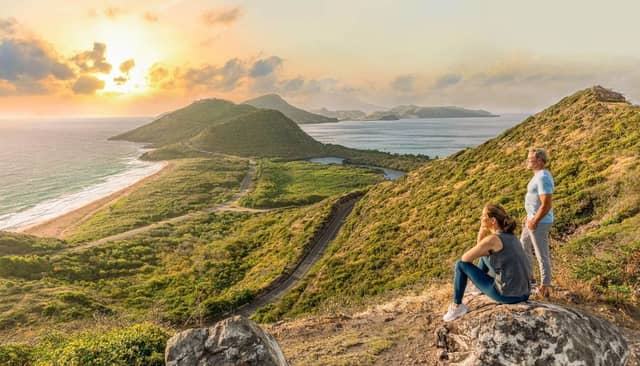

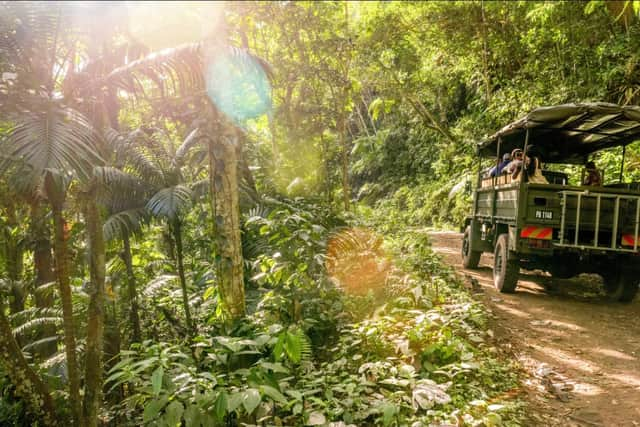
The clanging old army truck judders up the narrow dirt track as we all cling on for dear life. Banana tree branches with leaves the size of umbrellas swish past, and the azure-edged sands of St Kitts fall away below.
Our guide, Kerryn “Tiem” Williams, pops up from a hole in the roof of the cab and shouts: “Sorry to drag you away from the beach, but I think you’re gonna like it!” A huge grin appears across his face.
The tiny twin-island Federation of St Kitts and Nevis, with its fascinating but brutal history of warring between French and British colonists, became the smallest independent nation in the Western Hemisphere in 1983. Now, it is confidently charting its own distinct course away from the fly-and-flop model of many of its higher-profile Caribbean neighbours.
Sugar cane plantations, once the mainstay of the islands’ economy, have given way to tourism as the most-important economic sector, with the picturesque ruins of hundreds of years of sugar and rum production providing an atmospheric backdrop.
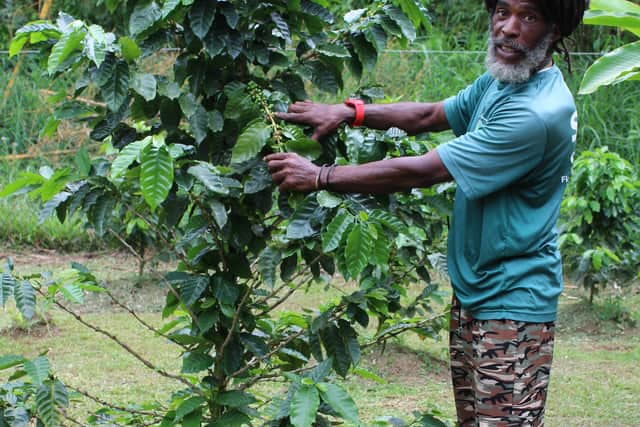
We’d been forewarned to go easy on breakfast, with all indications that this would be a farm-to-table experience to remember. On arrival, we are ushered to a long table, heavy with food from the farm – curried eggs from the 80 free range chickens pecking about nearby, eggplant ratatouille, papaya jam on pumpkin pancakes, fresh fruit and vegetable wraps – all served on naturally anti-microbial banana leaves and washed down with coffee from beans grown on site.
Tiem then guides us down a path past enormous fruit and vegetables: papaya, avocados, limes and mangoes still too young to harvest but twice the size of those in the local Tesco, a small but growing pineapple patch and even a healthy cannabis plant – its cultivation is legal within a private dwelling on St Kitts with a permit.
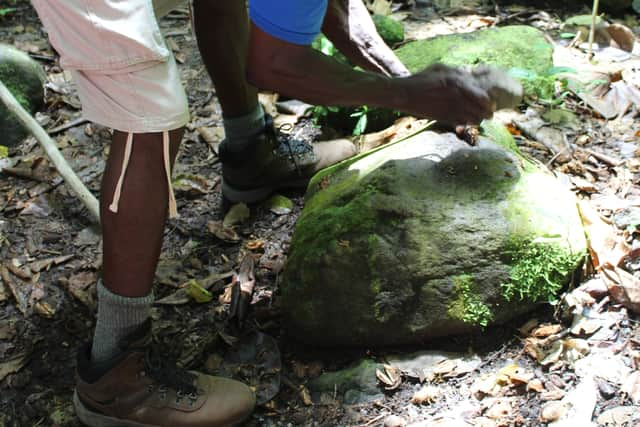
The trip is a unique look at authentic island life, but it is not the only adventure we make into the rainforest. After an afternoon getting a beach fix, the next morning we meet local expert O’Neil Mulraine at Wingfield Estate, site of a sugar plantation dating back to the 1650s.
Over the following hour, O’Neil introduces us to the secrets of the forest, its plants and their medicinal benefits, flowers and seasonal fruits, and the sounds of crickets, toads, green tree frogs and the chatter of monkeys.
At one point, we stop to snack on fresh almonds that have fallen from a tree along the trail, and cool our hands and feet in pristine streams edged with delicate ferns, surrounded by a thousand shades of green and blue sky peeking through the canopy above.
It’s hot, but our walk finishes back at Wingfield where we started, which helpfully is also the earliest known place of rum production in the Caribbean, dating back to 1681 and now back in operation as the Old Road Rum Company.
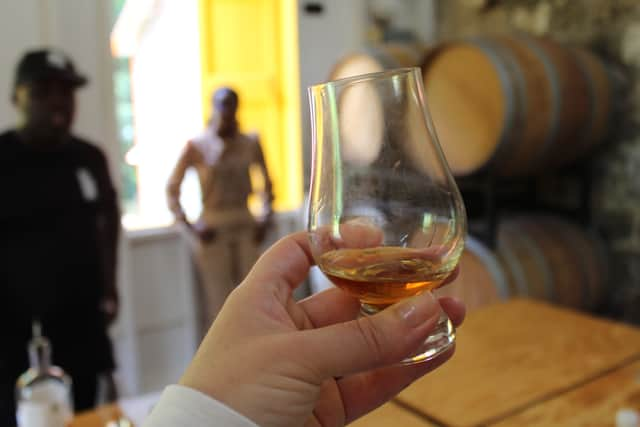
We sample the rum currently available to buy, which is crafted from imported, molasses-based rum that is aged in bourbon casks for 12 years. We hear that the ambition is to return rum distillation to the site, and eventually plant sugar cane to bring the entire operation back to life.
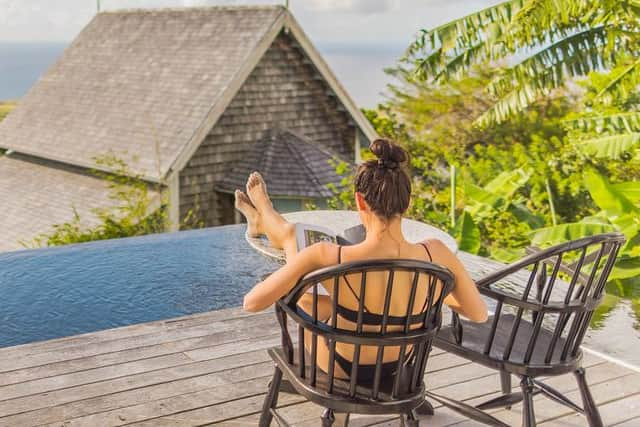
Now fully immersed in island time, acclimatising to the heat and fortified with sweet rum, we return to our first hotel of the trip, the Belle Mont Sanctuary Resort nestled on Kittitian Hill at one thousand feet above sea level, with its standalone cottages and villas – many with their own infinity pools – overlooking the point where the Atlantic Ocean meets the Caribbean Sea.
That evening, chef Telsa Johnson, who was born on the island, presents us with a feast of locally-produced delicacies – “that I grew up eating”, he tells us. We start with salt fish fritters and green banana, sweet potato and breadfruit chips. Many recipes have been handed down through the generations, like the flavourful Kittitian mutton stew, while freshly-caught Mahi Mahi and snapper are accompanied by local vegetables and salsa made from fruit growing around the estate.
We have flown eight hours for sun and sea but it is almost with regret that we leave the refreshing calm of the rain-forested mountains. However, tiny, vibrant Nevis is just 3km across a stretch of water called The Narrows and is waiting to be explored. We board a catamaran and stop on the way to snorkel, before we are deposited on the white sands of Pinney’s Beach, just a few metres from Sunshine’s Bar and Grill.
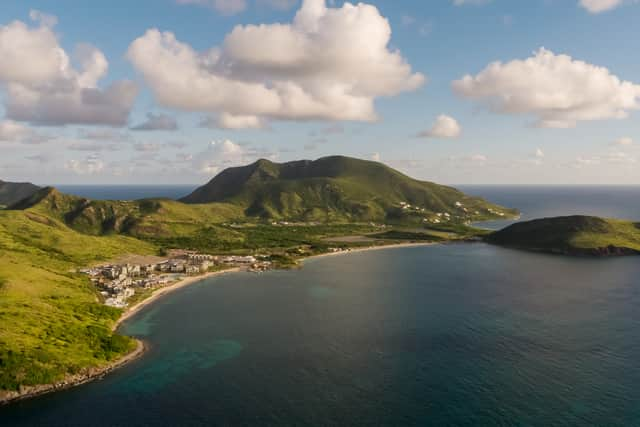
From here, we return to the beachside luxury of the Park Hyatt St Kitts, which spans the entire Banana Bay with its white sands, crystal clear water and spectacular views back to Nevis.
The hotel pays homage to its location in the form of the luxurious Sugar Mill spa, with its treatment lotions featuring ginger, lime, sugar cane and coconut, and restaurant menus championing local dishes.
But perhaps the loveliest moment comes at 6am, sitting on the terrace as the sun rises and the early morning Caribbean breeze rustles the palms, reflecting on a trip to islands that proudly offer their visitors a rich culture and history, as well as spectacular beaches.
How to plan your trip
Rooms at Park Hyatt St Kitts start from US$375/£299 (plus taxes) room-only. Visit hyatt.com.
Rooms at Belle Mont Sanctuary Resort start from US$879/£782, including breakfast. Visit bellemontsanctuaryresort.com.
British Airways (ba.com) flies to St Kitts from London Gatwick from £506pp.
For more information on St. Kitts, see visitstkitts.com.