

Why going local is the only way to visit dream destination Bali
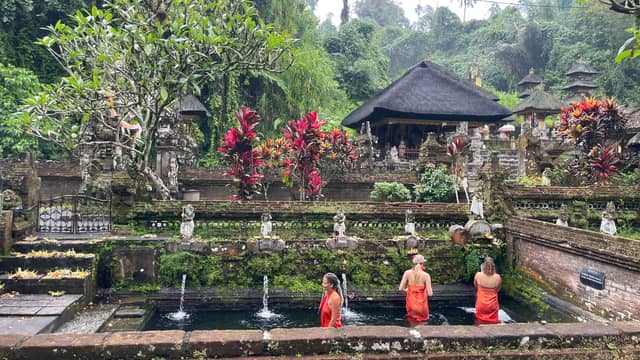

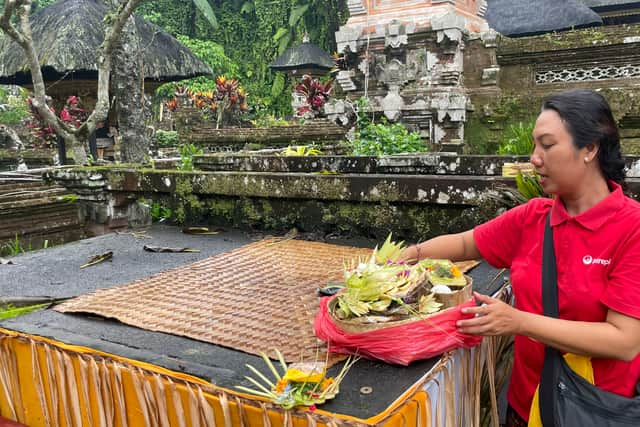
“You cannot come into the temple unless you are happy; you have to be smiling when you make offering,” my guide Srix tells me, a beaming smile stretching across her own face.
I am standing outside the Gunung Kawi Sebatu Temple near Ubud in the rural centre of Bali, while attempting to fix a sarong around my waist. The traditional garment with a golden selendang cloth tie is mandatory to enter the Hindu temple, where I am about to experience a purification ceremony.
Tourist visits to sacred sites on the Indonesian island have caused some controversy in recent years, with reports of backpackers in bikinis, naked influencers and disruption to dance performances.
Tour operator Intrepid claim the best way to strike a happy balance is by staying in locally-owned accommodation, visiting remote communities and following the guidance of local tour leaders – like Srix – who are sensitive to traditional cultures.
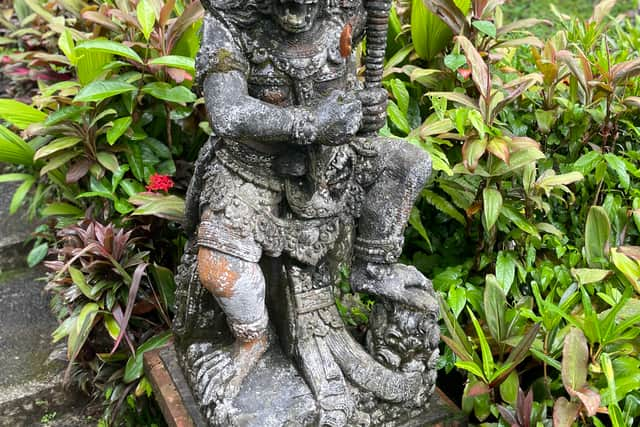
As we walk through the main entrance, she points out two statues with “scary faces” and tells me: “This is so when we enter the temple, we have to lose our negative thoughts, only the positive thing you can bring in.”
We enter the purification pools, where Srix shows me how to pray, sitting in a yoga pose, and invites me to make a wish before making an offering and stepping into the first pond.
Whatever negativity I managed to sneak past the scary temple statues has now definitely been washed away, and I certainly feel peaceful in the lush tropical surroundings of Bali ,which is a predominantly Hindu island while the rest of Indonesia’s islands are Muslim.
In the evening, I have the chance to experience traditional Balinese dancing by the Sekehe Gong performers backed by a band of bamboo Gamelan musicians at Cafe Lotus, which has the stunning illuminated backdrop of Saraswati Temple.
Dancers arrive in traditional golden dresses and and as they strike a series of angled poses, I get the sudden un-nerving feeling that one of them is staring at me, her face layered in make-up as stark as a porcelain doll.
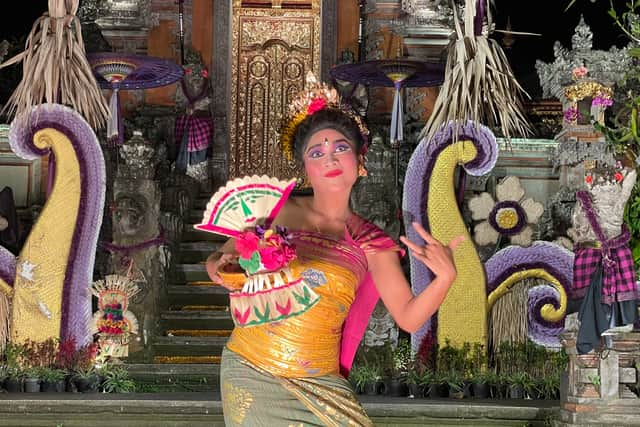
As we sit down in the restaurant, which has a series of stylish low tables with cushion seating overlooking an atmospheric pond, I ask Srix if the jerking, staring eye movements had a purpose. She tells me: “In Balinese dancing, all of your body is moving, your eyes, your fingers, your neck; it’s your identity, it’s your personality.”
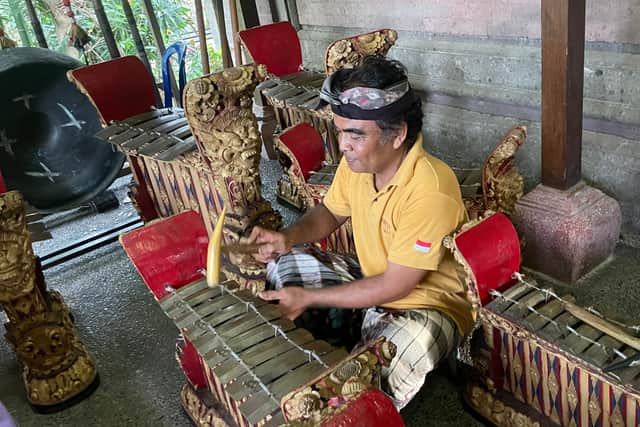
‘Easy’, I think – until I try to make my left hand attempt to follow my right. My heart is willing but my co-ordination is clearly not so keen and I make a laughable mess of it, silencing the notes before I’ve even played them.
After my enthusiastic, if not musical, attempt is over, Ngurah gives me a full rendition of the Gamelan tari baris dance – or soldier dance – that I had been learning. His hands float and jerk above the gamelan, striking each note perfectly in time with the tune as it loops hypnotically, giving me a renewed appreciation for the music from the previous night’s performance.
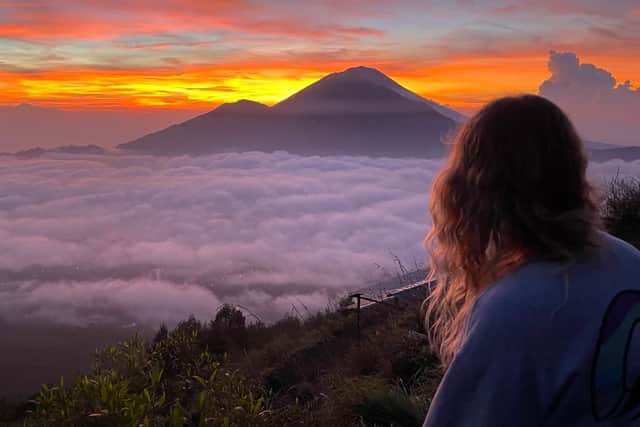
The walk to the 1717m summit is on scrabbly volcanic rock, but it is never too steep or slippery and I arrive at the top sooner than I expect, all the time getting a glimpse of the sky reddening on the horizon over a blanket of cloud. On one of the many benches on the outer edge of the volcano’s crater, I sit to appreciate nature’s light show. The sky slowly scrolls from a deep red to a golden hue – the same colour as the selendang sarong tie used in the temples. No wonder this is called the ‘holy colour’ in this country.
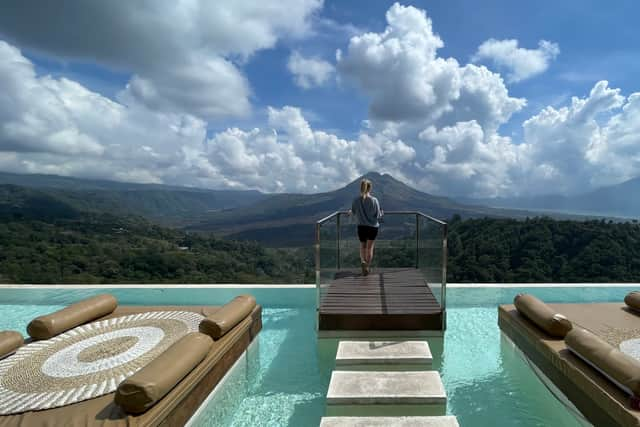
As the daylight spreads, I see glimpses through the cloud layer of the vast green landscape around us and Srix tells me that the people of Bali are determined to keep their island’s reputation as “the green island” through the use of strict planning rules.
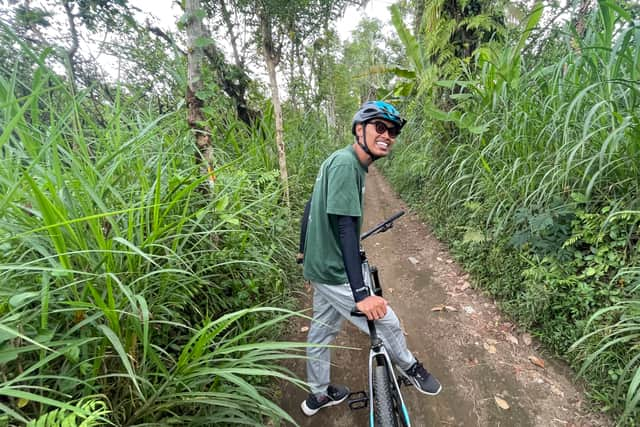
The next morning allows me to have a more down-to-earth view of the green island, as cycling guide Dewa takes me on a tour on two wheels of the villages of Bayung Gede and Tampak Siring.
Thankfully given the heat, we ride downhill, passing through rice fields where the grains are waiting to be harvested, before stopping at a village house where they grow almost all of the food they need. He tells me: “The people here are happy, they do not need money for new phones, it is peaceful here.”
I am staying in a simple bungalow room with a bathroom which, Srix tells me, with a giggle, is traditionally used as a “production room” – a honeymoon suite where couples stay for three days after they get married.
Wayan Nanik and Adit, both in their early 20s, show me around the village, stopping every couple of metres to explain how almost every plant or tree has multiple purposes, but most importantly for making alcohol. These two young entrepreneurs are bottling the wine made from fermented salek fruit and designing the labels, as well as curating their own YouTube and social media campaign to promote their village.
Adit takes me to the temple where he shows me a large wooden bell and tells me: “This is the village WhatsApp, we bang it hard and fast if there is an emergency.”
As I say goodbye to my hosts, I realise that like the rules of the temple that forbid you from bringing unhappiness inside, I have also left behind any pent-up stress and negativity during my trip – thanks to beautiful Bali and its wonderfully welcoming people.
How to plan your trip
Intrepid Travel (intrepidtravel.com; 0808 274 5111) offers a nine-day Beautiful Bali escorted tour from £652pp, including B&B accommodation, ground transport, selected meals, and activities. International flights extra. Various departure dates.