

Public sector pay deal should ‘advance productivity’, Taoiseach says
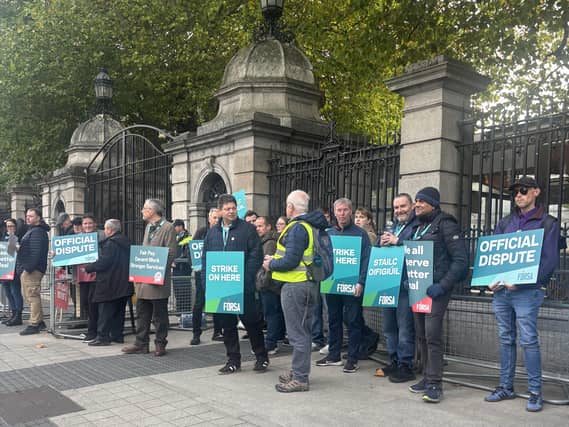

Formal negotiations between the Government and trade unions on a new pay deal are expected to get under way on Monday.
Taoiseach Micheál Martin has said he hopes any new public sector pay deal would “advance productivity”.
Formal negotiations between the Government and trade unions on a new pay deal are expected to get under way at the Workplace Relations Commission on Monday.
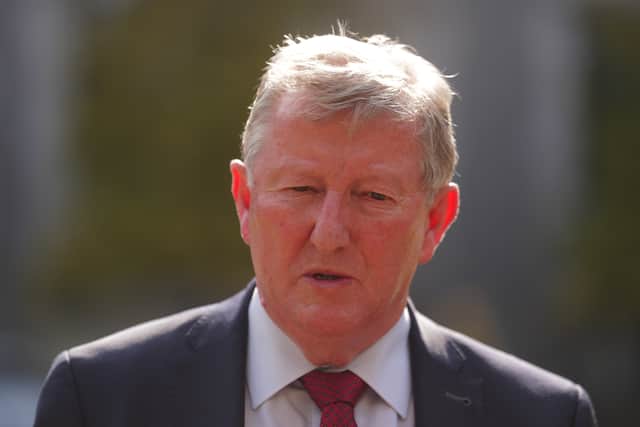
Minister of State Sean Canney said he hopes the talks will lead to a deal in the “not too distant future”.
However, Sinn Féin TD Claire Kerrane said a deadlock that led to a strike by public sector workers last week was a “mess of the Government’s making”.
More than 300,000 public sector workers, including nurses, doctors, teachers and civil servants, took part in a national strike last Wednesday.
A second strike had been planned for next Wednesday but the public services committee (PSC) of the Irish Congress of Trade Unions (ICTU) said on Friday that after discussions with Government representatives, the 19 unions had agreed to suspend the action.
PSC chairman Kevin Callinan said the Government has agreed to appoint an independent third party, Kevin Foley, to conduct an “intensive and focused” exercise aimed at constructing a basis for formal negotiations at the Workplace Relations Commission (WRC).
It was then announced over the weekend that both sides would enter into official discussions on a new public sector pay deal, which are expected to begin on Monday.
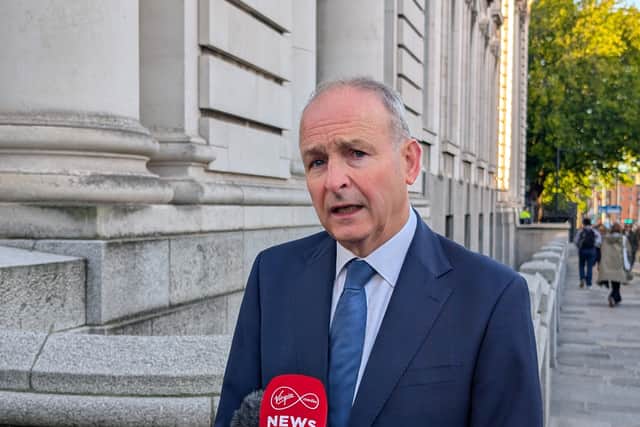
On Sunday, Mr Martin welcomed the fact that a process had been agreed: “I’m open to an agreement that obviously is affordable, that can advance the productivity within the public service, but again that would look after, in particular, protections to low-paid workers.”
“We’ve always had a view of endeavouring always to protect lower-paid workers within the public service.
“There are a broad range of roles, different areas to be covered in terms of the size and scale of our public service. But that’s a matter that has to be ironed out in the context of negotiations.”
Mr Canney told RTÉ’s The Week In Politics programme that everybody can look back and learn from what happened.
He said: “I would say that everybody involved in this, unions, union leaders as well, there had been reach out in September.
“There had been a reach out again last week from (Public Expenditure) Minister Jack Chambers, and I would prefer at this stage to say we’re starting talks tomorrow about the next public sector pay deal.
“It is important that we had the Budget pass with 1.2 billion euro left aside for this pay deal, which is part of the process.
“And I would say in that, it gave us gave an indication of the willingness by this Government to make sure that we have a pay agreement into the future.”
He added: “I am very confident that… negotiations will start, and that a successor in the national pay talks will be found in the not too distant future.”
Ms Kerrane said: “This was a mess of the government’s making.
“Remember at the start, the current, the previous pay deal ended in June. The two previous pay deals were done as it was coming to an end. That was the first failure.
“Then we had the Government, how many times did they use the word preconditions? ‘Oh, we’re not meeting because unions have preconditions, they want to talk about pay and pay deals upfront’. That was a problem.
“Then you had Micheál Martin on radio saying that they wanted to picket anyway.
“That caused an awful lot of annoyance.”
Mr Foley met with trade union representatives, ICTU general secretary Owen Reidy and Oonagh Buckley, the secretary-general of the Department of the Environment, in Dublin on Saturday.
In a statement, they said: “Following engagement with the parties, we believe that discussions at the WRC should get under way on Monday, October 19.
“The discussions should commence with pay-related matters, including the trade unions’ claims on cost-of-living effects between 2021–2025, this year, and for the duration of any agreement.”