

How Munich is reviving its retro party roots to become a fun city break

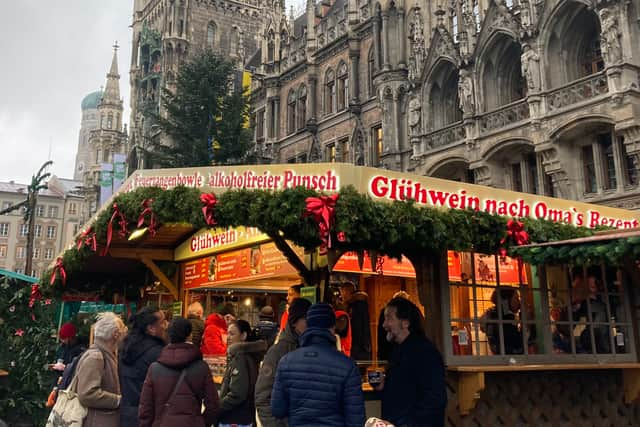
Surrounded by darkness, I take a deep breath of the freezing air. The warming scent of oranges and sweet cinnamon guides me to a wooden hut, where a man spreads thick chocolate sauce on sizzling crepes and ladles out mugs of steaming mulled wine.
Shoppers bustle past, perusing Christmas decorations for sale at neighbouring stalls. Fat baubles in reds, golds and greens twinkle in the lights along with glistening snow globes.
Munich beyond the markets
It’s true that when most people think of Munich, the heartland of the Bavarian state of Germany, their minds automatically go to the Christmas markets, or the world-famous beer festival Oktoberfest, or even the lauded Bayern Munich football team.
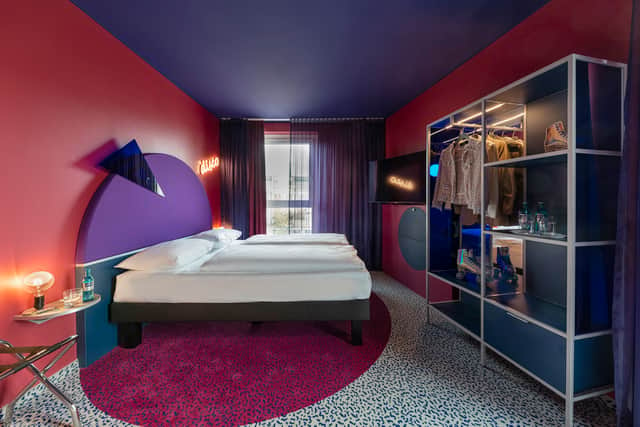
However, Munich’s trendy, progressive history is often overlooked. But affordable hotel chain ibis Styles has set out to flip the narrative with the launch of their brand new hotel, ibis Styles München Perlach. With it’s spectacular retro-themed design, it revives the city’s past underground disco culture.
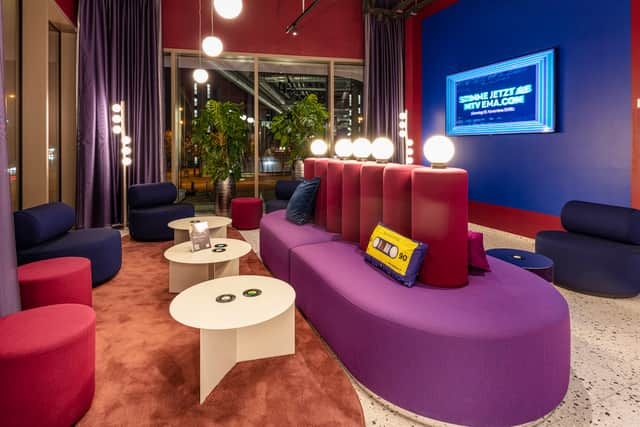
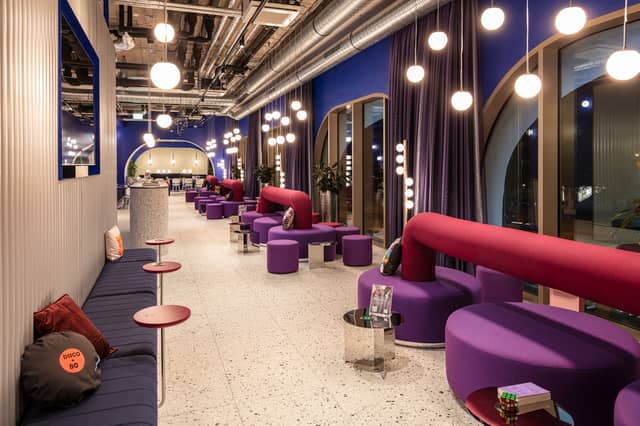
Structural tube sofas in plush jewel colours are scattered with cushions featuring famous album covers from the Seventies and Eighties. Vinyl record motifs, sequinned fabrics and wavy design features add to the retro décor.
A sleek DJ booth positioned in the centre of the space, large glittering mirror balls hanging from the ceiling and popular music from past decades playing in the background transports you straight to Munich’s disco past.
Discovering boho Schwabing
Opened in time for Oktoberfest 2022, the shiny new hotel is located in the quiet Perlach district, south-east of Munich’s centre. The U-Bahn station Neuperlach Zentrum is on the other side of the road, where it is only a short train ride directly into the city centre, with good links to the airport.
A 30-minute train ride takes me to the district of Schwabing, located in the northern part of the city, once the bohemian epicentre of Germany at the turn of the 1900s.
During the 1960s student riots, Schwabing became a hotbed of rebellion and resistance. Schwabinger Krawalle occurred in response to the police expelling a group of street musicians from the area. Sparking a cultural revolution, the libertine spirit of Schwabing kickstarted the birth of many counter culture-themed performance venues.
While gentrification has taken a visible toll on the area, some small, independent and alternative event spaces from the Sixties and Seventies still exist today.
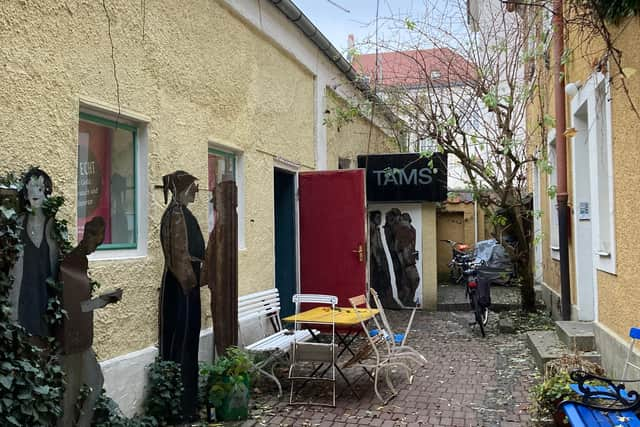
Another relic that is a must-see is the Münchner Lach-und-Schießgesellschaft (lachundschiess.de; from €20/£17 per show), which translates as ‘The Laughing And Shooting Society’. The club was founded in the late Fifties by a group of journalists, as a resistance to the conservative government in power at the time. At one point, the legendary political cabaret was even broadcast on television from its venue on Ursulastraße.
Just around the corner, on Occamstraße, is the Münchner Lustspielhaus (lustspielhaus.de; from €29/£25 per show). Rowdy and raucous shows hosted at this cabaret club would often draw police attention in its heyday. Shows would run past midnight and musical numbers that spilled out onto the street would feature lyrics that were considered controversial for its time.
Dancing the night away
Yet comedy and cabaret were not the only art forms that were prevalent during this period, with the conservative city playing host to an emerging underground nightclub scene.
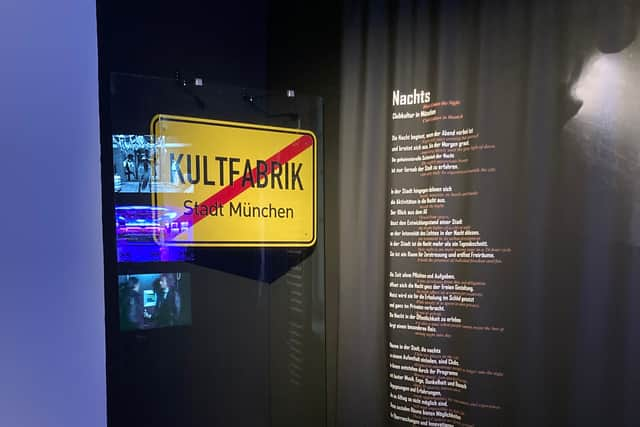
Walking through the darkened exhibit to a soundtrack of bumping electronic bass and throbbing beats, ticket holders can view artefacts that have been preserved from eras gone by, such as programmes, tickets and posters.
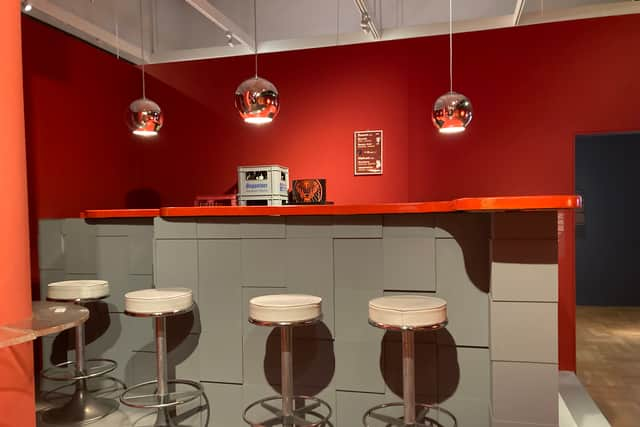
The exhibition, which will run until January 2024, also features extensive video footage and images of Munich’s most notorious nightclubs. One of these, the Atomic Cafe, has even been restored as a walk-through installation for the public to explore.
Following in Freddie Mercury’s footsteps
It was at Musicland Studios where Freddie Mercury chose to record his solo album, Mr Bad Guy. Escaping the UK for a life of privacy and freedom, he lived in in Munich from 1979 to 1985, taking up residence in an apartment at Stollberg Plaza, on Stollbergstraße.
A great way to explore some of Munich’s hotspots from the Seventies and Eighties is by joining a Freddie Mercury tour of the city (muctours.de; €39/£33.50 per person). One significant stop-off point during the two-hour tour is Paradiso Tanzbar, once known as Old Mrs Henderson’s club (paradiso-tanzbar.de) where Freddie hosted his 39th birthday party. The event was filmed and used as footage for his ‘Living On My Own’ music video.
Paradiso Tanzbar is nestled on the edge of Glockenbachviertel, Munich’s LGBTQ district. Home to various gay bars and clubs, the famous Restaurant Deutsche Eiche (deutsche-eiche.de) is located just around the corner.
Dining on the past
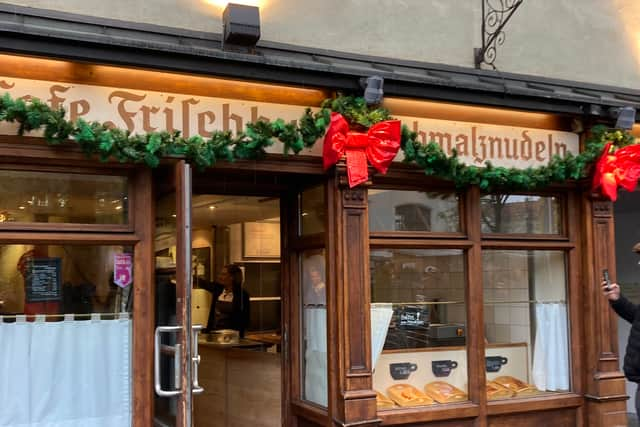
The café offers five types of schmalznudel (€2.60/£2.20), a crispy Bavarian pastry made from fried dough, perfect for soaking up one too many glühweins from the neighbouring Christmas market. Enjoy one with a mug of creamy hot chocolate, while taking refuge from the cold.
For a more substantial meal, Cafe Pini (cafepini.de) in Glockenbachviertel pays homage to it’s location’s retro past. Italian light bites and an extensive spritz-based cocktail menu (priced around €10/£8.50 for a main meal) are on offer here. From retro-patterned wallpaper and mid-century-style teak furniture, it is clear that Munich’s rich heritage still lingers in the present day.
How to plan your trip
Rooms at the ibis Styles München Perlach (all.accor.com) start at €79/£68 per night for a single room. Doubles are priced from €89/£76 and family rooms from €130/£111. Breakfast is extra.