

100 years of royal wedding dress trends
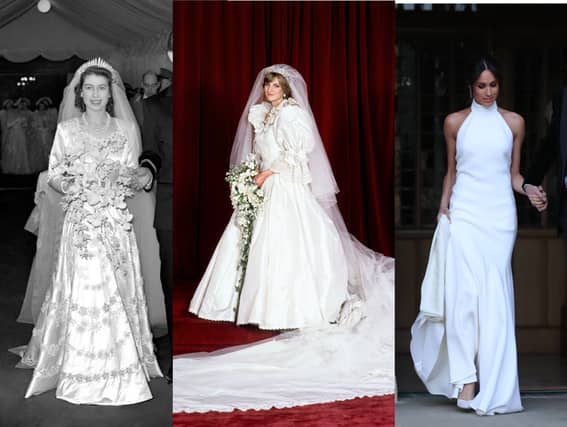

Royal weddings have been captivating the public for years, but the most talked-about part of them always happens to be the bride’s dress.
While royals are known to opt for classic and timeless tailoring, even they are not immune to the influence of trends.
So, here’s a look back at 100 years of royal wedding dress trends starting in the 1920s…
Lord and Lady Mountbatten, 1922
In the Twenties, wedding dress trends had shifted from corseted waists and full skirts (a trend started by Queen Victoria in her 1840 wedding to Prince Albert) to looser, dropped waists and shorter hemlines.
The decade marked a shift toward modernity and liberation post the First World War, and the spirit of the Jazz Age favoured looser, shorter dresses that allowed more freedom of movement.
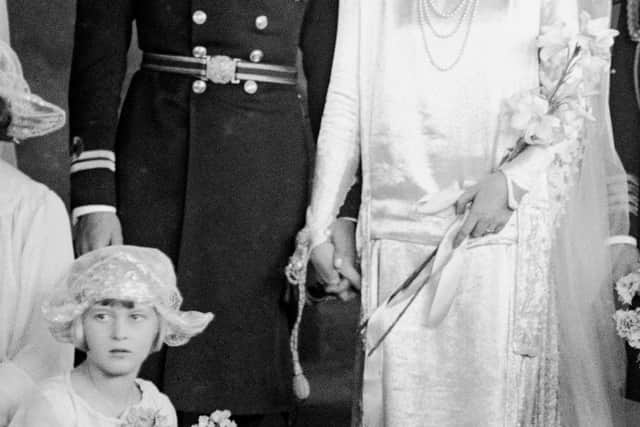
Lady Mountbatten wore a signature style of the decade, in a round-necked, ankle-length silver satin gown with beaded detailing and a four-foot lace veil.
Queen Elizabeth II and Prince Philip, 1947
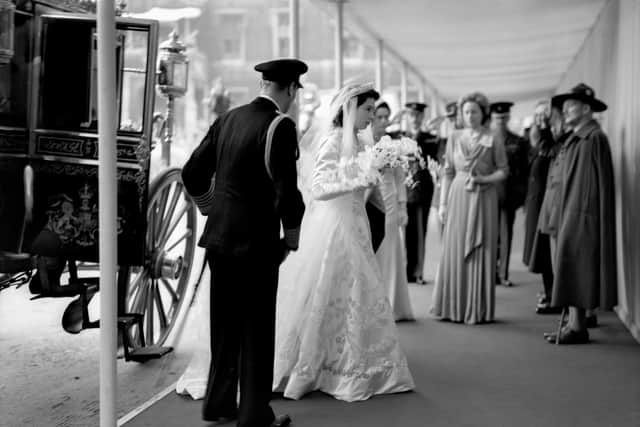
The then Princess Elizabeth and Lieutenant Philip Mountbatten married in Westminster Abbey on 20 November, 1947.
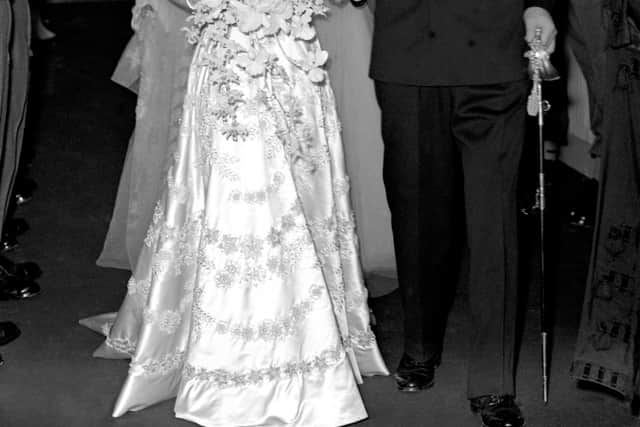
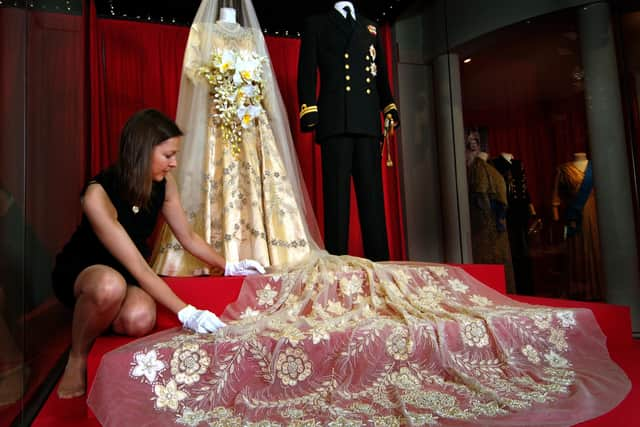
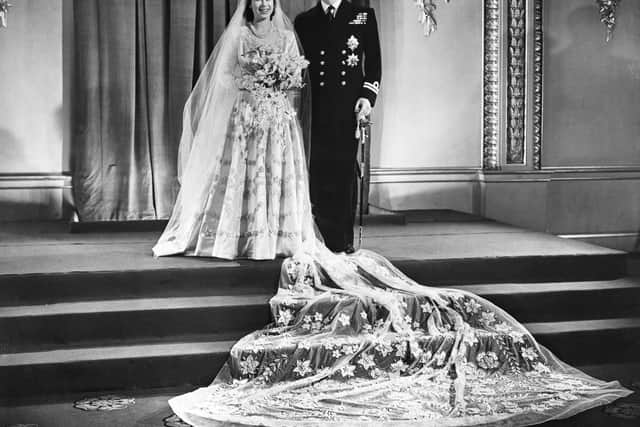
On account of the austerity measures following the war, Princess Elizabeth had to use clothing ration coupons to show her entitlement to the dress.
Princess Margaret and Lord Snowdon, 1960
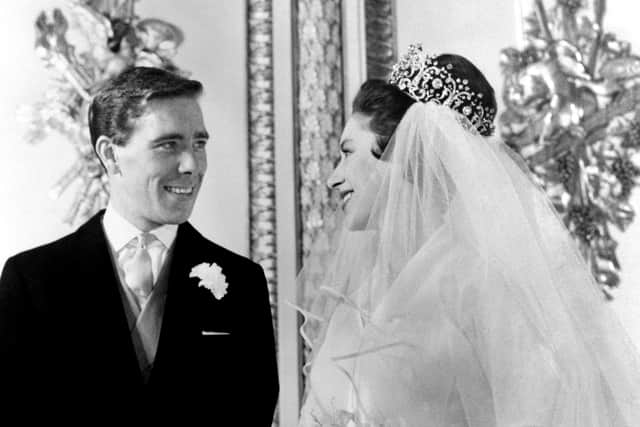
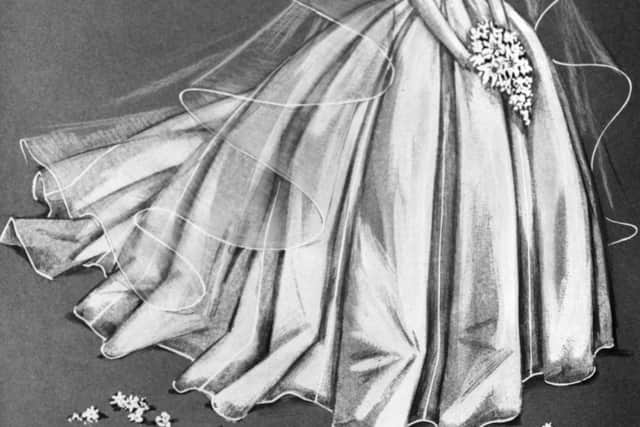
The dress was refreshingly modern and featured no embroidery or motifs on the gown or veil.
Princess Anne and Captain Mark Phillips, 1973
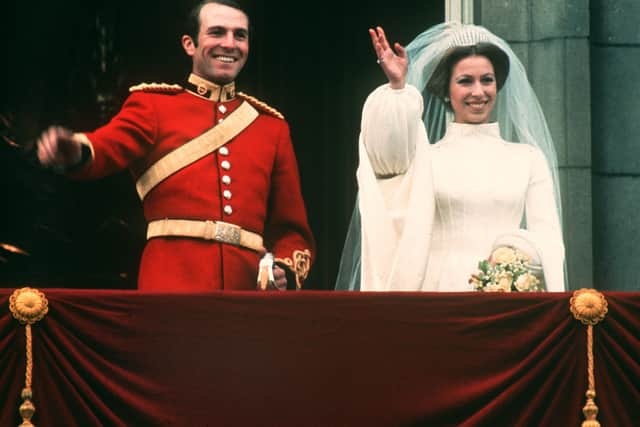
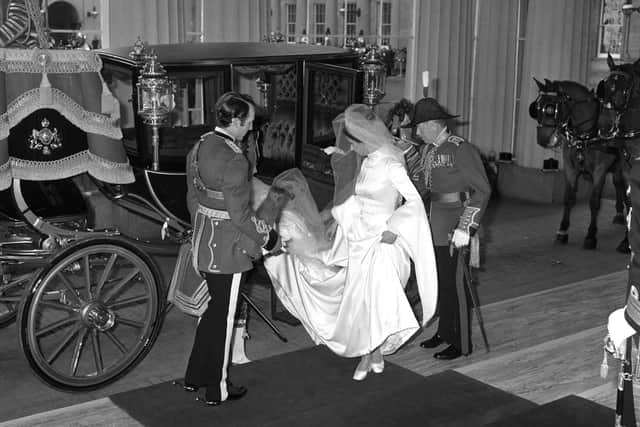
In contrast to earlier royal bridal gowns, it was considered “simplistic” and closely aligned with the contemporary wedding styles of the Seventies.
Prince Charles and Princess Diana, 1981
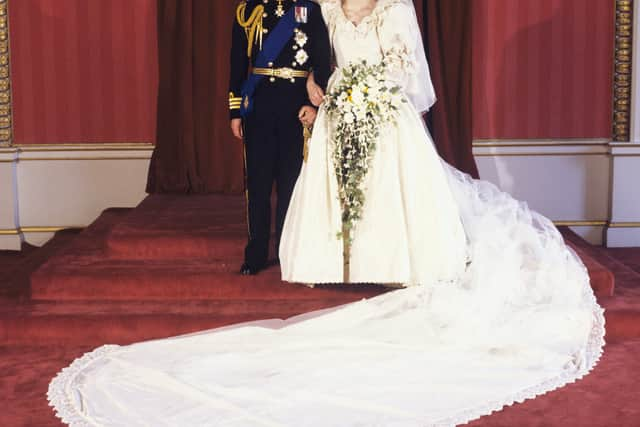
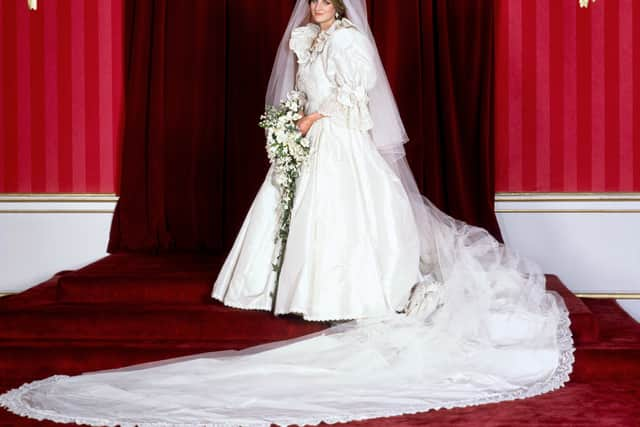
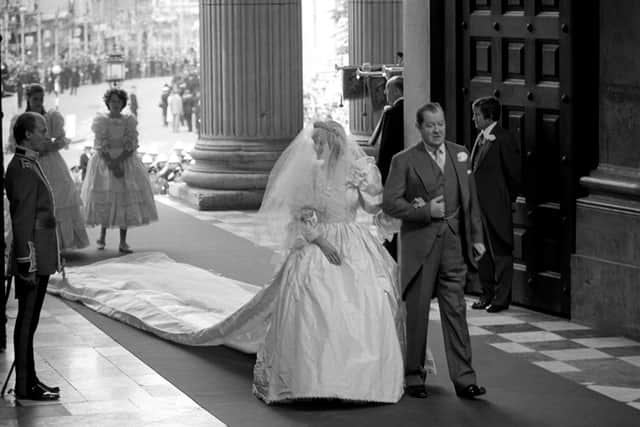
Its fairy-tale silhouette sparked a wave of copycat styles, setting the tone for wedding fashion throughout the decade and cementing Diana as a (bridal) style icon.
Prince Andrew and Sarah Ferguson, 1986
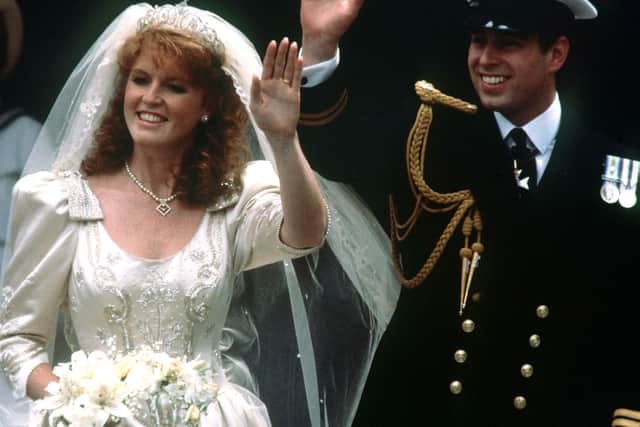
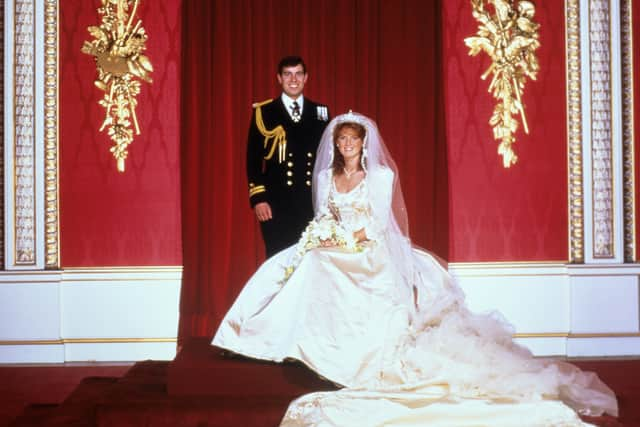
The dramatic 17-foot train and heart-shaped neckline echoed the romantic, voluminous styles popular in the Eighties.
Lady Sarah Armstrong-Jones and Daniel Chatto, 1994
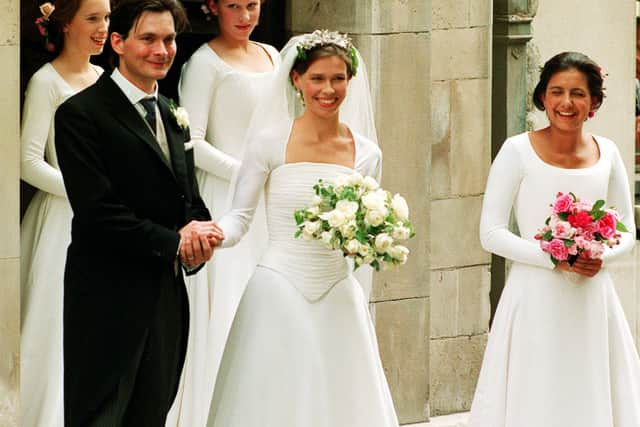
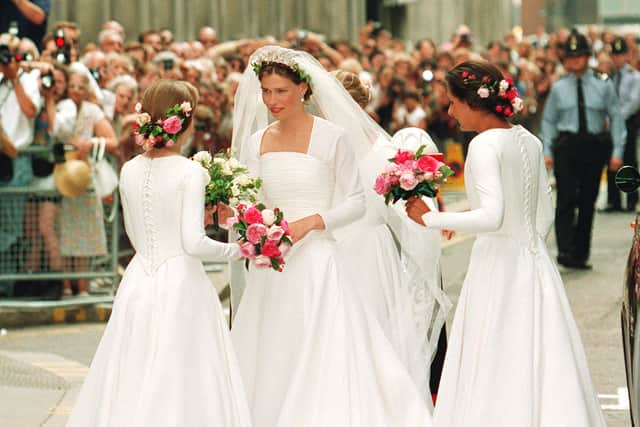
Made from ivory silk crepe, its simplicity and timeless cut stood out for its quiet sophistication, echoing the Nineties move towards pared-back bridal fashion.
Prince Edward and Sophie Rhys-Jones, 1999
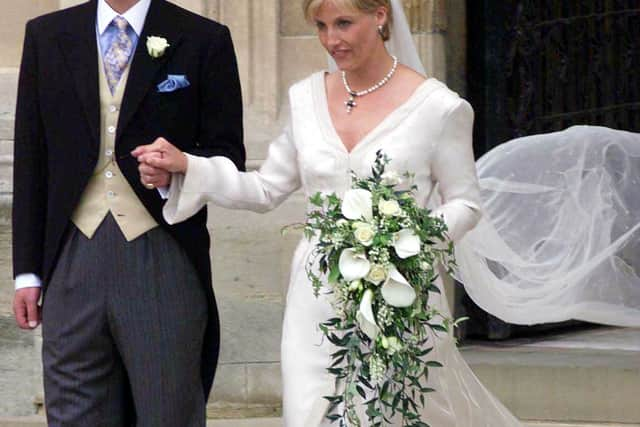
The now Duchess of Edinburgh’s gown was crafted from hand-dyed silk organza and embellished with over 325,000 pearls and crystal beads and featured a full-length coat-style overlay with a subtle V-neckline.
The style balanced traditional royal formality with the sleek, streamlined silhouettes that were gaining more popular at the turn of the millennium.
Prince William and Catherine Middleton, 2011
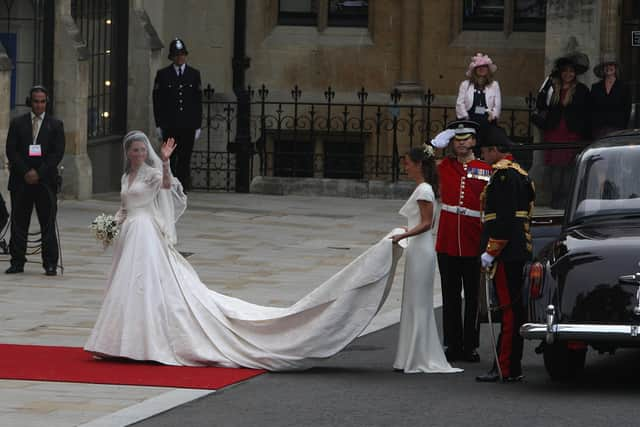
The now Princess of Wales, wanted a wedding gown that combined “tradition and modernity with the artistic vision that characterises Alexander McQueen’s work”, the Palace said at the time.
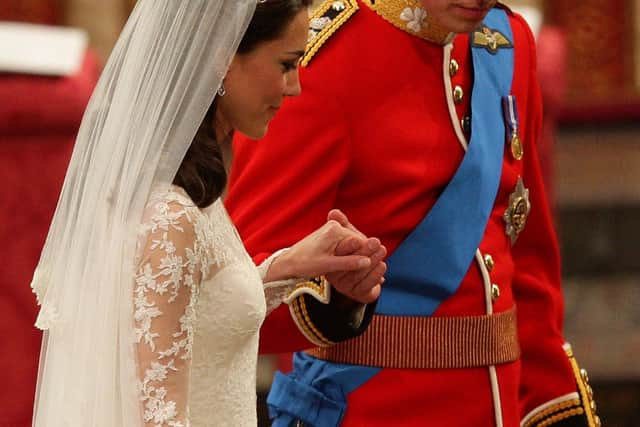
The dress sparked a global resurgence in interest for modest, lace-sleeved gowns with structured silhouettes – marking a shift away from strapless or heavily embellished styles that had dominated the early 2000s.
Designers and bridal brands quickly embraced the “Kate effect,” with replicas and inspired styles appearing across collections worldwide.
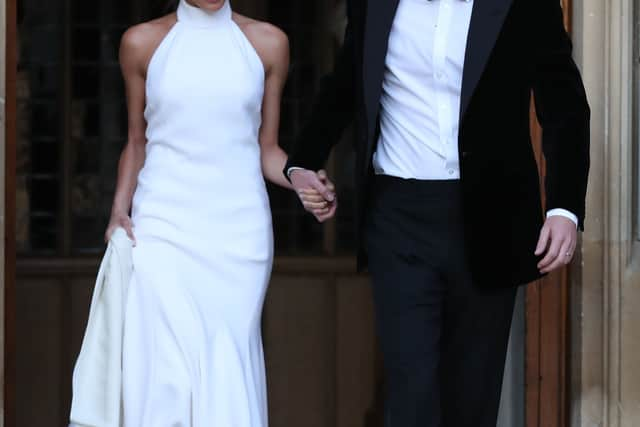
Prince Harry and Meghan Markle, 2018
Prince Harry married American actress Meghan Markle in May 2018 at St George’s Chapel, in Windsor Castle.
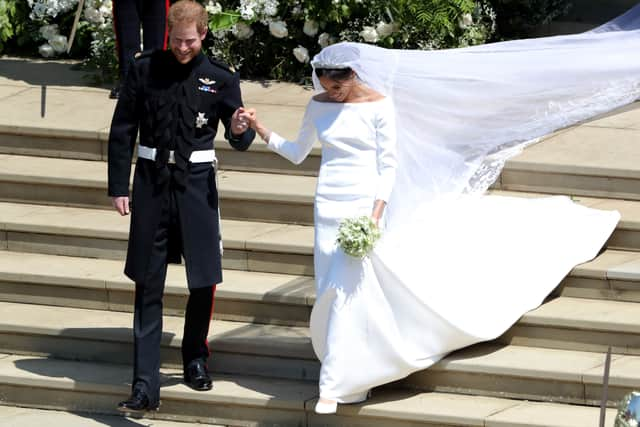
The dress was widely praised for its understated elegance and symbolic simplicity and leant into the ‘quiet luxury’ bridal trends of the late 2010s.
Princess Eugenie and Jack Brooksbank, 2018
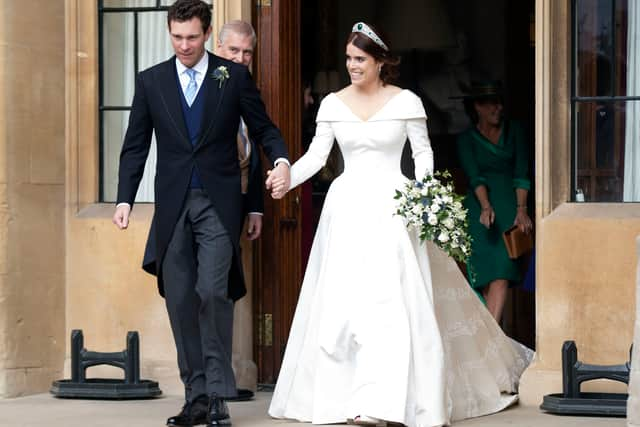
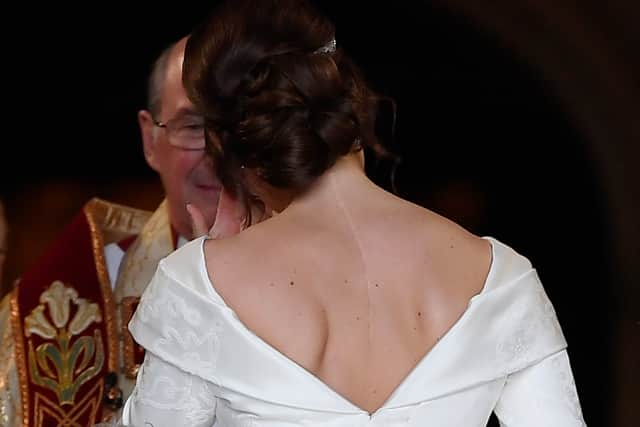
Made from a jacquard of symbols, including a Scottish thistle, to show the couple’s fondness for Balmoral, an Irish shamrock, a nod to the bride’s maternal family, a York Rose, a reference to her family name of York and ivy, which represented the Ivy Cottage, the couple’s home at Kensington Palace.
Princess Beatrice and Edoardo Mapelli Mozzi, 2020
Princess Beatrice’s wedding dress was truly a sign of the times – a nostalgic nod to happier moments as she married British property developer Edoardo Mapelli Mozzi mid-pandemic in July 2020, at the Royal Chapel of All Saints at Royal Lodge, Windsor.
Beatrice wore a vintage Norman Hartnell gown originally designed in the 1960s and previously worn by her grandmother, Queen Elizabeth II.
The dress was remodelled with organza puffed sleeves and a satin hem to suit Beatrice’s style.
The decision to wear a repurposed dress not only reflected the intimate and understated nature of her ceremony but also resonated with the decade’s growing interest in sustainable fashion.